


Modern Mandir Designs: Integrating Tradition into Contemporary Luxury Homes
In Indian homes, the mandir is not just another design element.
It is a space of calm, devotion, and ritual. No matter how modern a home becomes, the pooja space remains non-negotiable for most families.
The real challenge today is not whether to include a mandir it is how to design one that blends beautifully with contemporary interiors.
Many homeowners worry that a mandir will feel too traditional or visually heavy inside a modern home.
But when designed thoughtfully, a modern mandir design for the hall can become one of the most elegant and meaningful features in the house.
At House of Arth, we often design pooja spaces that combine traditional symbolism with modern materials, lighting, and craftsmanship.
The result is a mandir that feels both spiritual and architecturally refined.

Why Modern Mandir Design Matters in Contemporary Homes
Earlier homes had dedicated pooja rooms with carved doors and heavy wood structures.
Today, apartments and urban homes require a different approach.
Modern mandir design focuses on:
clean lines
thoughtful lighting
subtle traditional details
integration with the living space
Instead of looking separate, the mandir becomes part of the home’s architecture.
Pooja Room Designs in Wood: Timeless and Elegant
Wood continues to be the most popular material for mandir design.
The warmth and craftsmanship of wood naturally complements spiritual spaces.
In modern interiors, pooja room designs in wood are often interpreted in a more minimal way.
Instead of ornate carvings everywhere, designers prefer:
fluted wood panel
scarved jaali panels
floating wooden platforms
backlit wooden backdrops
These elements preserve tradition while keeping the overall design modern.

Modern Mandir Design for Hall Spaces
Many apartments today do not have separate pooja rooms.
This is why modern mandir design for the hall has become one of the most searched interior design topics in India.
When designing mandirs inside living rooms, the goal is to create a sacred space without overwhelming the room.
Some popular approaches include:
1. Wall Niche Mandir
A recessed wall niche creates a clean and elegant pooja space.
The niche can be highlighted with:
backlit stone panels
wooden backdrops
subtle temple-style arches
This approach works well for smaller apartments.

2. Floating Mandir Units
Floating mandir units are becoming popular in modern homes.
These designs usually include:
• a wooden base platform
• wall panel with subtle carvings
• concealed drawers for storage
The floating design keeps the space visually light.
3. Mandir with Jaali Panels
Jaali patterns are deeply rooted in Indian temple architecture.
Modern mandir designs often use laser-cut wooden jaali panels to create a soft separation between the mandir and the rest of the living room.
When combined with warm lighting, the effect feels both sacred and contemporary.
4. Marble and Wood Combination
A luxurious mandir often combines marble and wood.
The marble platform adds purity and elegance, while wood introduces warmth.
Many modern homes use:
• white marble base
• wooden backdrop
• brass accents
This combination feels both traditional and refined.
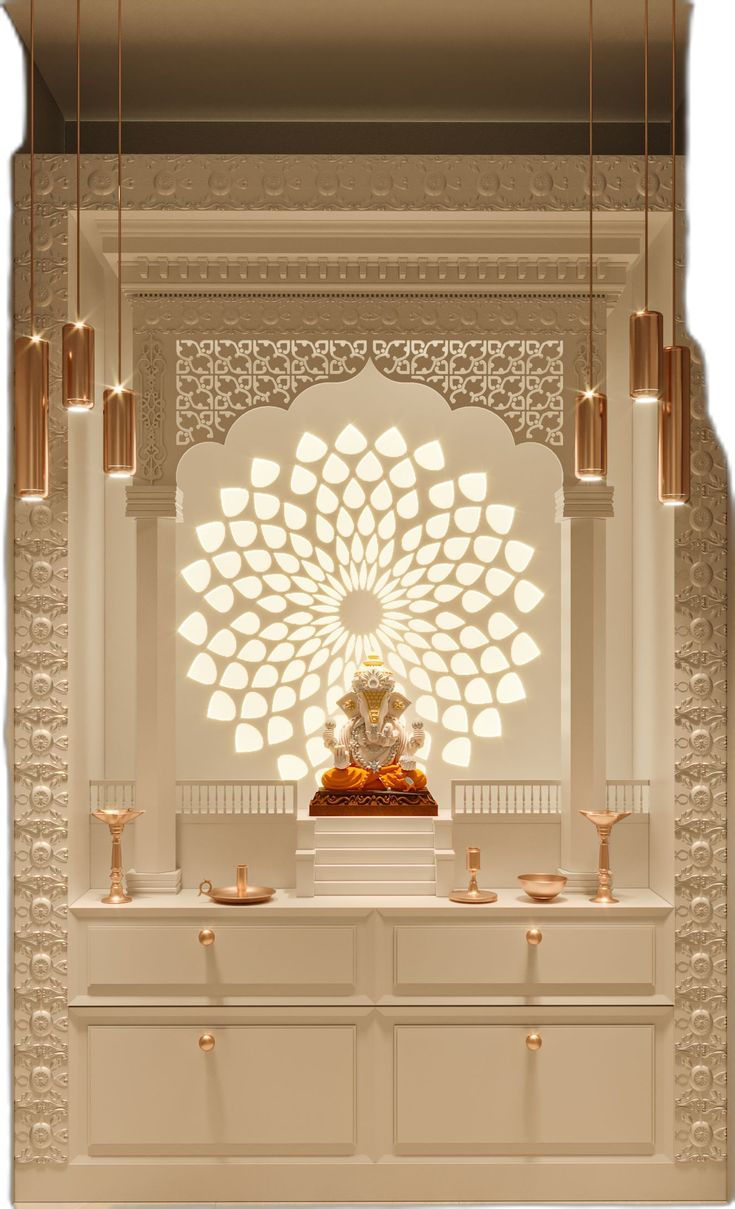
5. Backlit Mandir Panels
Lighting plays a huge role in mandir design.
Backlit panels create a soft spiritual glow that enhances the atmosphere.
Popular materials include:
• onyx stone
• carved wood panels
• textured stone backdrops
The lighting should feel warm and gentle rather than bright.

Lighting in Modern Mandir Designs
Lighting is one of the most important aspects of a pooja space.
The goal is to create a calm, sacred atmosphere.
Designers often use:
• concealed LED lighting
• soft backlighting behind idols
• pendant lamps inspired by temple diyas
• profile lighting integrated into shelves
When done correctly, lighting transforms the mandir into a peaceful focal point.
Storage Solutions in Pooja Units
A well-designed mandir also includes practical storage.
This allows homeowners to store items like:
• diyas
• incense sticks
• prayer books
• pooja thalis
Hidden drawers or cabinets below the platform keep the space organized without disturbing the visual harmony.
Designing Mandirs for Pune Apartments
In cities like Pune, many homes are compact apartments where space is carefully planned.
A mandir should therefore feel integrated rather than bulky.
In our House of Arth projects, we often design:
• wall-mounted mandirs
• recessed niches
• panelled pooja walls
• mandir units integrated into the living room wall
This approach keeps the space sacred while maintaining a modern aesthetic.
Creating a Sacred Space in a Modern Home
A mandir should always feel peaceful.
Beyond design and materials, the real essence of the space comes from balance.
Good mandir design considers:
proportion
lighting
placement
material warmth
When these elements come together, the pooja space feels both spiritual and elegant.
Final Thoughts
Modern homes may change in style, technology, and layout.
But the mandir continues to remain the heart of the home.
A thoughtful modern mandir design for the hall allows families to maintain their traditions while embracing contemporary interiors.
And with carefully crafted pooja room designs in wood, the sacred space becomes not just functional, but beautifully timeless.


Comments